
One English council lists a £96.10 charge for treating a wasp nest, another in Scotland lists £86.40 for 2026/27, a third in Wales lists £80.89, one in Scotland treats nests free only for its own tenants, and one in Northern Ireland says it provides no pest treatment service. This guide sets those five council pages beside the Royal Horticultural Society (RHS) advice on wasps and the NHS page on stings, all read on 31 October 2026. It is a comparison of five councils, not a survey, and other councils may differ. General information, not a treatment recommendation.
If a sting causes a severe reaction
The NHS page on insect bites and stings says to call 999 if lips, mouth, throat or tongue suddenly become swollen, if breathing is very fast or a person is struggling to breathe, if the throat feels tight or swallowing is difficult, or if someone becomes very confused, drowsy or dizzy or faints and cannot be woken. It describes these as possible signs of a serious allergic reaction. The page shows a last reviewed date of 1 June 2023 and a next review due date of 1 June 2026.
Does a nest have to come out?
The RHS, whose page shows no date and is written for gardens, says that where possible wasp nests should be left alone, that the nests die out in late summer or autumn, and that an old nest is never re-used although it can last several years before breaking down. It also says wasps defend their nest by stinging anyone or any animal nearby, and that wasps can present a hazard if a nest is disturbed, for example when a compost bin is emptied or a hedge is trimmed. For a possible Yellow-legged hornet, the RHS says not to go near the nest and to report it.
Mid and East Antrim Borough Council, in Northern Ireland, says a live nest that is not bothering anyone does not have to be destroyed, but that nests can cause problems for neighbours, and that it is not advisable to treat large nests or infestations yourself. It also says a nest found in winter will be dead and can be removed. Rugby Borough Council, in England, says not to attempt to remove or disturb a nest yourself and recommends professional treatment, particularly for large or hard-to-reach nests.
What five councils say about treatment and cost
- Rugby Borough Council (England): its pest control team treats wasp infestations; the page lists a domestic charge of £96.10 for up to 2 visits for a single nest, plus £11.90 for each extra nest.
- Scottish Borders Council (Scotland): its domestic charge for wasps in the 2026/27 financial year is £86.40 including VAT, with £90 for commercial premises.
- Highland Council (Scotland): its free pest control service, which lists wasps, is only available to council tenants, and other householders or businesses should contact a private company. The page shows a last modified date of 10 June 2026.
- Neath Port Talbot Council (Wales): a paid service, with one wasp treatment at £80.89 including VAT. The page says waiting times are currently longer than usual.
- Mid and East Antrim Borough Council (Northern Ireland): the page says the council does not provide a pest treatment service and points to lists of companies on the British Pest Control Association and National Pest Technicians Association websites.
Only the Scottish Borders and Highland pages show a financial year or modified date; Rugby’s page links to its 2026/27 fees and charges but shows no page date, and the Neath Port Talbot and Mid and East Antrim pages show none, so current figures are best confirmed with each council.
Wasp, bee or something else?
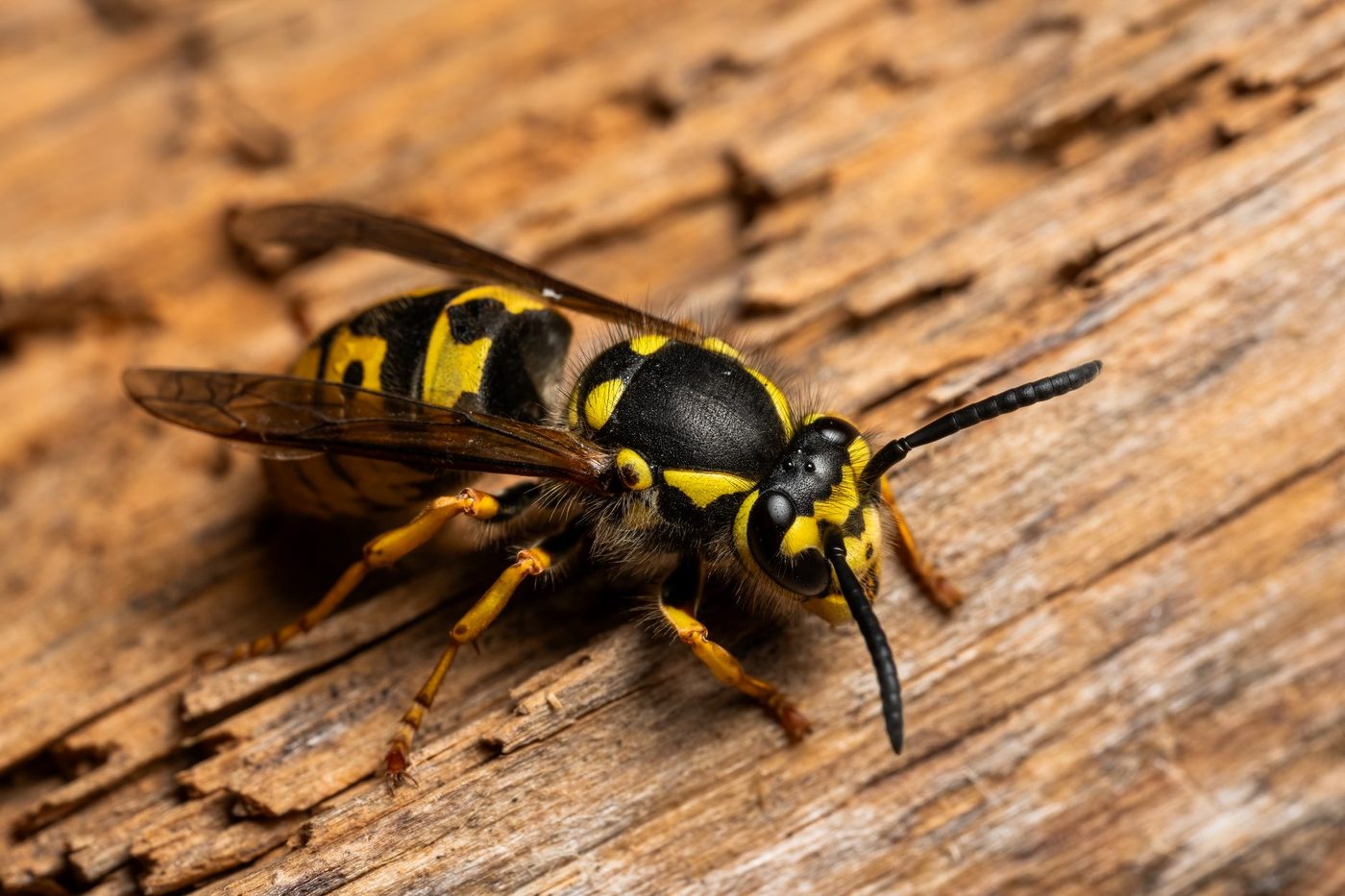
Neath Port Talbot says it does not treat bees, which it describes as highly beneficial, and describes wasps as bright black and yellow, with little or no hair, typically 1 to 2 cm long. The RHS says social wasps are more slender and less hairy than bumblebees, and that honeybees and most solitary bees are hairier than social wasps. Neath Port Talbot asks residents to use that information to tell the difference before contacting it about wasps and bees.
Renting a home
Rugby says responsibility for treatment can vary depending on the type of tenancy and circumstances, and that a private tenant should check the tenancy agreement or contact the landlord. Highland’s free service applies to council tenants only, as above.
Questions from a council FAQ that suit any quote
Rugby’s FAQ says that in the majority of cases a nest can be destroyed with a single treatment, but that multiple nests or nests that are hard to reach may need more. It says whether the quoted price includes follow-up visits depends on the treatment needed, that an extra charge applies for additional nests in different locations, and that occupants may be asked to keep people and pets away from the treatment area. Those points are the council’s own wording, and a private firm’s terms may differ.
The bottom line
The RHS says wasp nests should be left alone where possible and die out in late summer or autumn. The five council pages read show five different arrangements: paid treatment in Rugby (England), Scottish Borders (Scotland) and Neath Port Talbot (Wales), a free service for tenants only in Highland (Scotland), and no treatment service in Mid and East Antrim (Northern Ireland). Charges and policies can change, several pages show no date, and the NHS stings page was due for review on 1 June 2026, so the council, pest controller or NHS should be asked about current arrangements. General information, not a treatment recommendation.
Sources
- Wasps including hornets: Identification and Tips, Royal Horticultural Society, no date shown, read 31 October 2026 (rhs.org.uk)
- Insect bites and stings, NHS, last reviewed 1 June 2023, read 31 October 2026 (nhs.uk)
- Wasps, Rugby Borough Council, no date shown, read 31 October 2026 (rugby.gov.uk)
- Pest control, Scottish Borders Council, fees for the 2026/27 financial year, read 31 October 2026 (scotborders.gov.uk)
- Pest control for council tenants, Highland Council, last modified 10 June 2026, read 31 October 2026 (highland.gov.uk)
- Pest control treatment, Neath Port Talbot Council, no date shown, read 31 October 2026 (npt.gov.uk)
- Wasps, Mid and East Antrim Borough Council, no date shown, read 31 October 2026 (midandeastantrim.gov.uk)