
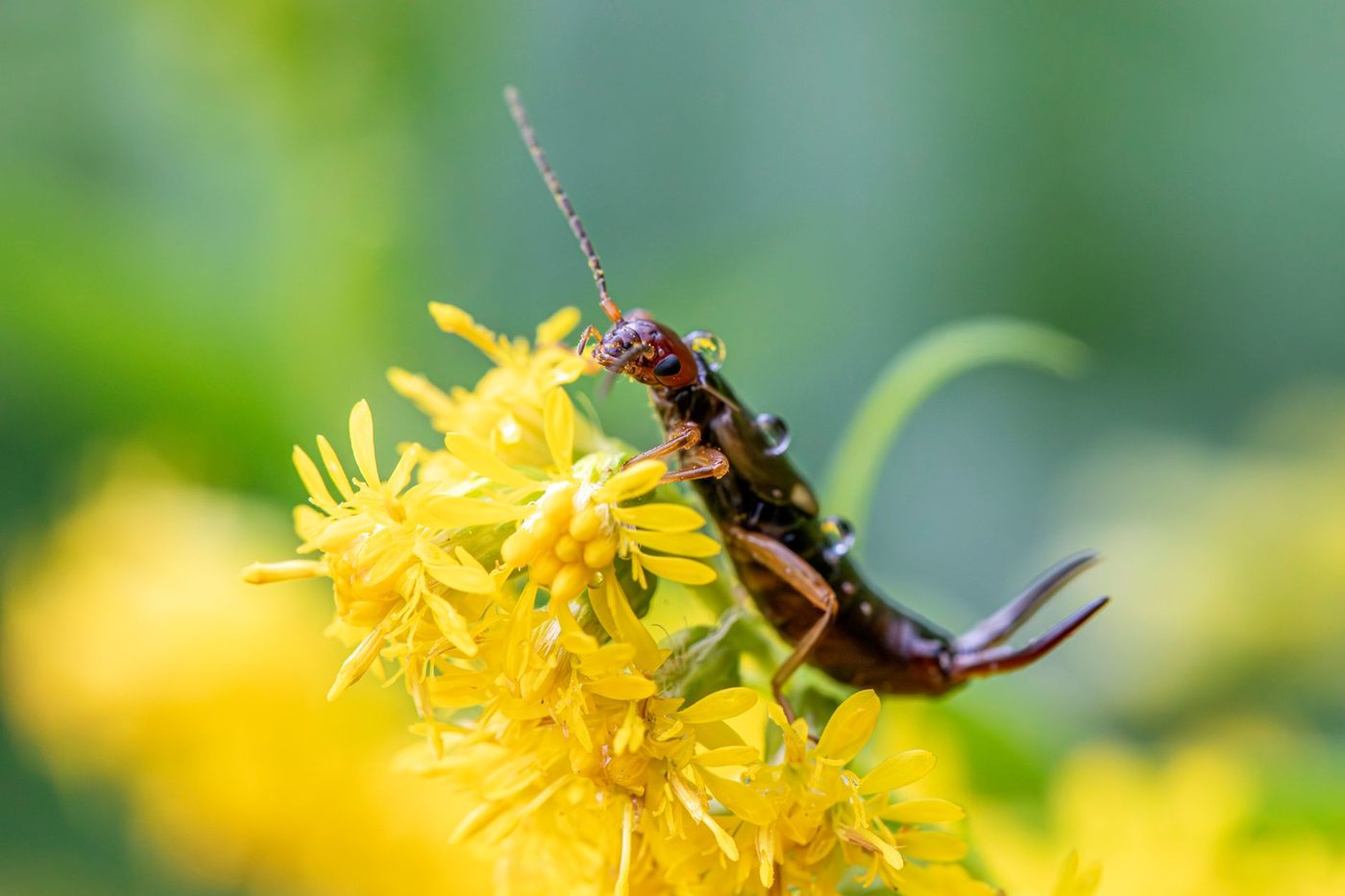
Three RHS Advice pages describe insects that gardeners often find on summer-fruiting canes, evergreen shrubs and cut-flower plants: raspberry beetle, viburnum beetle and the common earwig. This guide reads those three pages on 3 November 2026. None shows a publication or review date, so each is cited as “page undated”. It reports what the RHS says, attributed, and recommends no product. This is general information, not a diagnosis.
Dried patches and a pale grub at the stalk end of raspberries
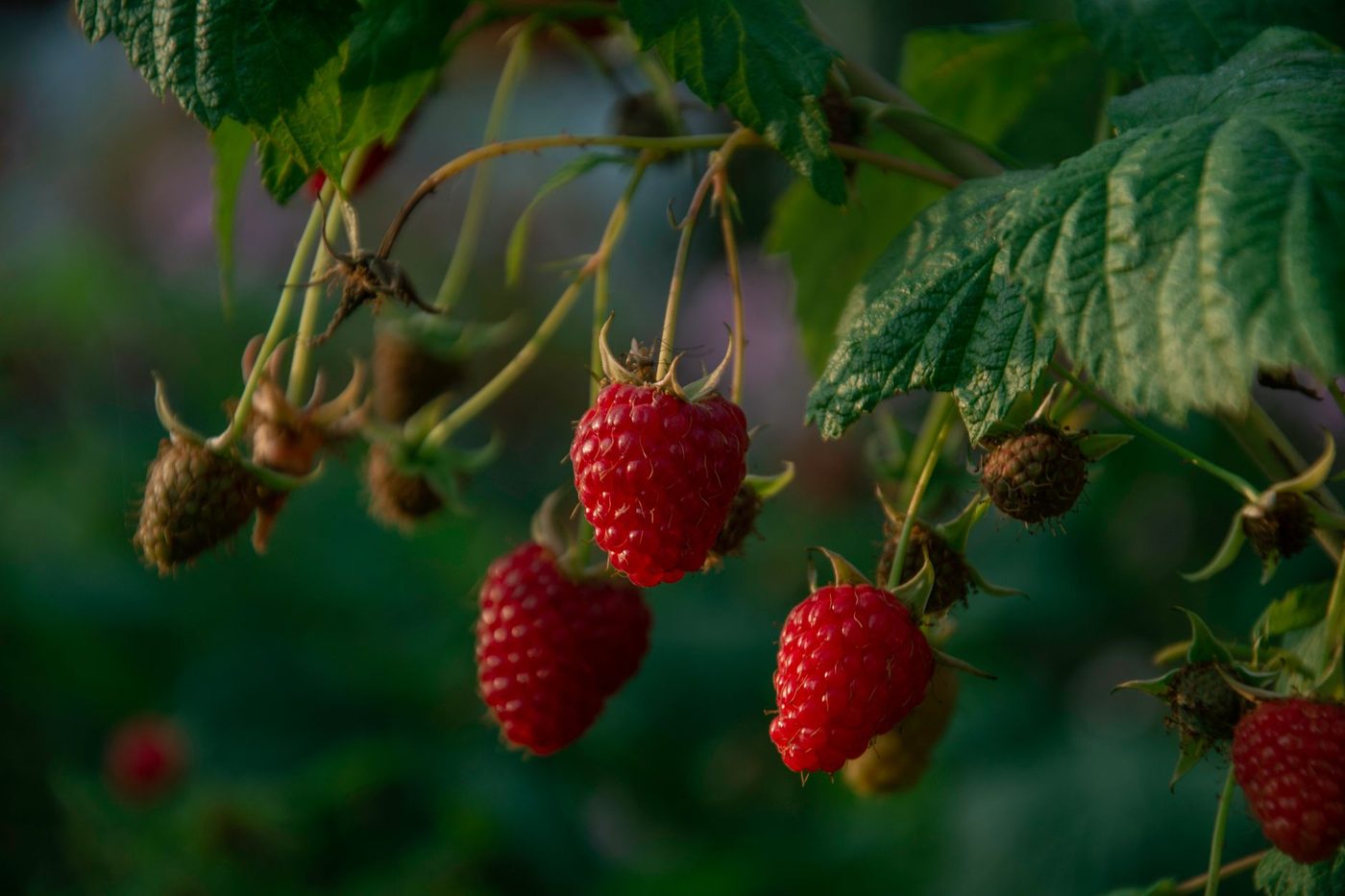
The RHS says the grubs of raspberry beetle can damage the fruits of raspberry, blackberry and other cane fruits, and that it is the larva that affects the fruit, feeding at the stalk end. The page lists the symptoms as damaged ripe berries with greyish-brown dried-up patches at the stalk end, and a brownish-white grub up to 8 mm long that may be found inside. The adult is a pale brown beetle about 4 mm long.
On timing, the RHS says the problem is mainly on summer-fruiting raspberries. Early fruits on autumn raspberries may be damaged, but those ripening after late August are less likely to be affected. Adults lay eggs on the flowers from May to mid-July, the larvae move inside the fruit to feed on the central plug, and in late summer fully fed larvae move into the soil, where they overwinter as pupae. The page names June to August as the most active period. It also notes that the only other British beetle in the same family looks similar but is associated with wood avens and does not affect garden plants.
The RHS management advice is to tolerate some beetle damage where possible, since often only a small proportion of the crop is affected, and to encourage predators such as birds, hedgehogs and ground beetles. It also mentions a water trap using a host plant odour (karimone), sold by suppliers, which it says traps both male and female beetles and may help reduce population levels.
Lace-like holes in viburnum leaves
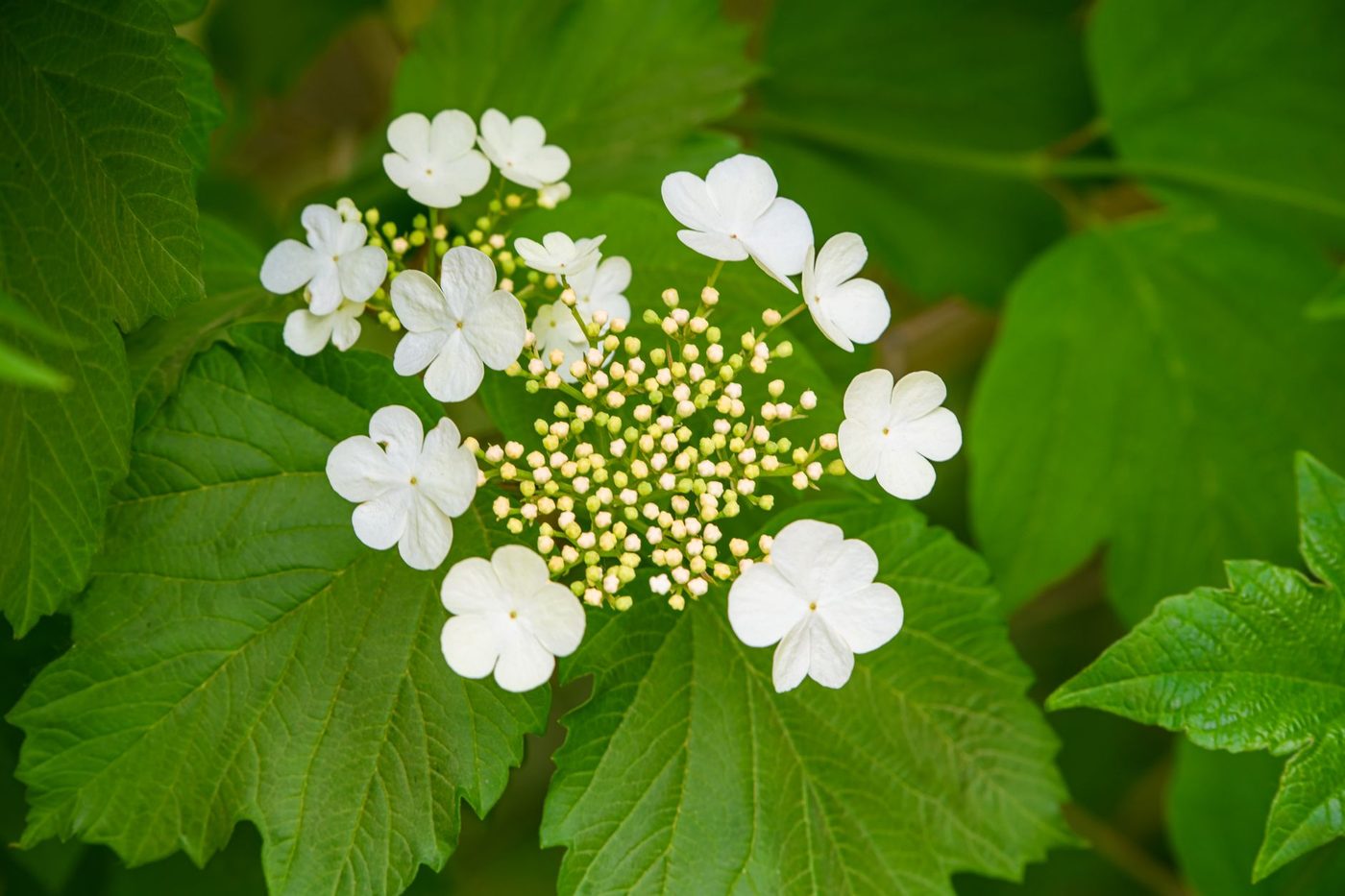
The RHS says viburnum beetle can defoliate some viburnums, especially Viburnum tinus and V. opulus. Most of the damage is done by larvae in spring, with some further damage from adult beetles in late summer. The symptoms are holes in the leaves with the larger veins remaining, giving a lace-like look. The larvae are creamy yellow with black markings, up to 8 mm long and present from April to June. The adults are greyish brown, 4.5 to 6 mm long, and feed from late July to September. The page adds that affected Viburnum tinus often produces an unpleasant odour, particularly when the foliage is wet.
For control, the RHS says to tolerate populations of larvae and adult beetles where possible, because viburnums usually recover from defoliation. It says larvae can be removed by hand where practical and that birds and predatory ground beetles will eat the larvae and sometimes the adults. It also says biological control nematodes are available from some suppliers and are watered onto affected plants, but warns that they have the potential to infect non-target animals, so they should be used with care and only when there is a specific problem to treat.
Nibbled petals on dahlias and an insect with pincers
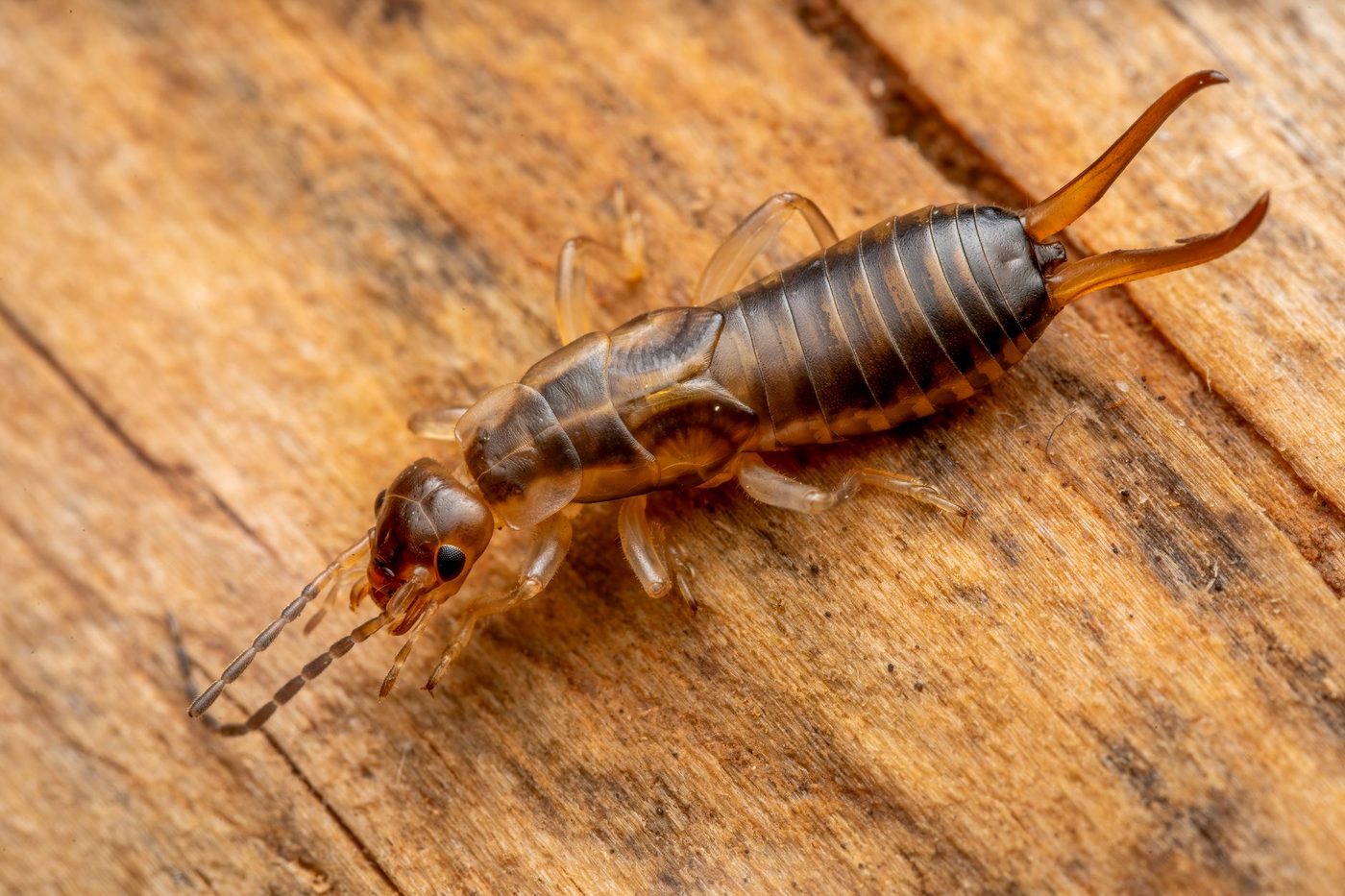
The RHS says the common earwig is a brown insect up to 13 to 15 mm long with a pair of distinctive pincers at the rear. It names dahlia, clematis and chrysanthemum as the plants mainly affected, where young leaves and flower petals are eaten, with older foliage occasionally reduced to a tattered network of veins. Earwigs hide in sheltered places by day and emerge after dark, and the page lists May to September as the most active period.
Because slugs and some caterpillars can cause similar feeding damage, the RHS advises inspecting plants by torchlight on a mild night to confirm earwigs are the cause. It also says the pincers are harmless although they may be raised in self defence.
The RHS describes earwigs as beneficial on fruit trees, where it says they can give good control of fruit aphids without damaging the trees or fruit, and it says they should be encouraged there. It also says to tolerate earwigs in the garden as part of the natural balance, adding that feeding damage is often superficial. Its trapping suggestion is upturned flower pots loosely stuffed with hay or straw set on canes among affected plants and emptied each morning; it says this may not protect plants when earwigs are abundant but is a useful way to monitor numbers, and it should not be done where earwigs are being encouraged in fruit trees.
Where the three pages agree
Each page tells the reader to tolerate the insect where possible: some beetle damage on raspberries, populations of viburnum beetle, and earwigs in the garden. The raspberry and viburnum pages also advise encouraging predators or wildlife such as birds and ground beetles, while the earwig page describes earwigs themselves as predators of fruit aphids.
What the pages do not say
The three pages give no costs and do not say when a professional is needed. The viburnum and earwig pages also point to an RHS statement on pesticides in horticulture, whose contents are not reported here.
The bottom line
The RHS pages read on 3 November 2026 describe raspberry beetle as a fruit grub most active from June to August, viburnum beetle as a spring larval and late-summer adult leaf feeder, and the common earwig as a night feeder on dahlia, clematis and chrysanthemum that the RHS also calls a useful predator of fruit aphids on fruit trees. For each, the RHS advice includes tolerating the insect where possible. All three pages are undated.
Sources
- Raspberry beetle: how to prevent damage, RHS Advice, page undated, read 3 November 2026 (rhs.org.uk)
- Viburnum beetle: how to spot and control, RHS Advice, page undated, read 3 November 2026 (rhs.org.uk)
- Earwigs, RHS Advice, page undated, read 3 November 2026 (rhs.org.uk)